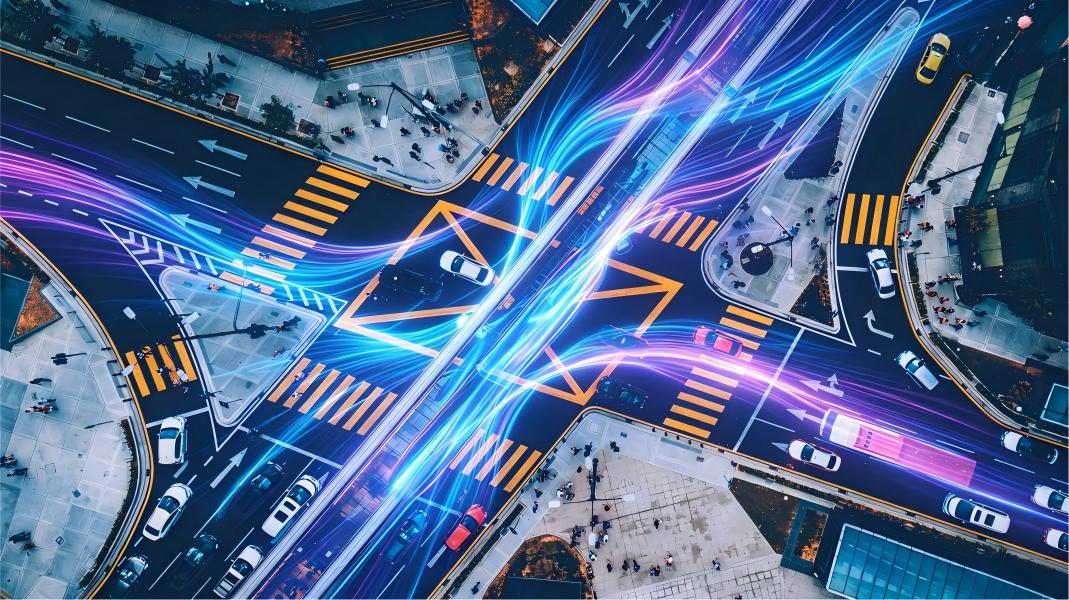
Fixed-timing traffic signal systems have long been a bottleneck for modern urban traffic management. Operating on preset static cycles, these traditional systems fail to respond to real-time traffic fluctuations, resulting in low intersection passing efficiency, redundant vehicle waiting time, and increased urban traffic carbon emissions. Coupled with the inherent defects of conventional traffic detection equipment, large-scale smart traffic upgrading has always faced practical deployment barriers.
Traditional traffic detection solutions have prominent limitations in complex road scenarios. Buried ground induction coils are easily damaged during road construction and daily road maintenance, requiring frequent overhaul and high long-term operation costs. Single camera detection, another mainstream traditional method, is highly susceptible to harsh environments including strong backlight, night darkness, heavy rain, fog and dust, leading to frequent false detection and missing detection. The unstable perception data makes it impossible to support accurate and dynamic traffic signal adjustment.
To address these industry pain points, radar-vision fusion sensing technology has become a lightweight, high-reliability solution for smart traffic renovation. It perfectly integrates the core advantages of millimeter-wave radar and optical cameras, realizing complementary performance and full-scene adaptive perception.
The vision module delivers high-precision identification and classification of road traffic participants, including sedans, SUVs, trucks and other vehicles, providing intuitive and detailed visual traffic data. Meanwhile, the millimeter-wave radar works stably around the clock, free from the interference of light changes and bad weather, and outputs real-time data such as vehicle speed, driving distance and road traffic density. Through professional data fusion algorithms, the system completely eliminates the data deviation problems of single-sensor equipment.
Based on accurate and stable real-time traffic data, the intelligent traffic system can realize fully adaptive traffic signal optimization. The platform dynamically adjusts the green light duration according to actual lane occupancy, vehicle queue length and real-time traffic flow. It extends green time for lanes with continuous traffic inflow to reduce queuing, shortens idle green time for vacant roads to improve overall intersection efficiency, and balances signal coordination among multiple intersections to optimize regional traffic flow.
Compared with traditional fixed-cycle traffic control modes, the radar-vision fusion solution features simple deployment, no need for large-scale road reconstruction, low investment cost and quick return on investment. It can effectively improve urban road utilization, relieve traffic congestion, and reduce vehicle idle emissions, helping cities achieve low-carbon, refined and intelligent traffic management.
For a detailed breakdown of the technical principles, working mechanisms and practical application value of adaptive smart traffic signal optimization, check out our in-depth technical article on Medium.
