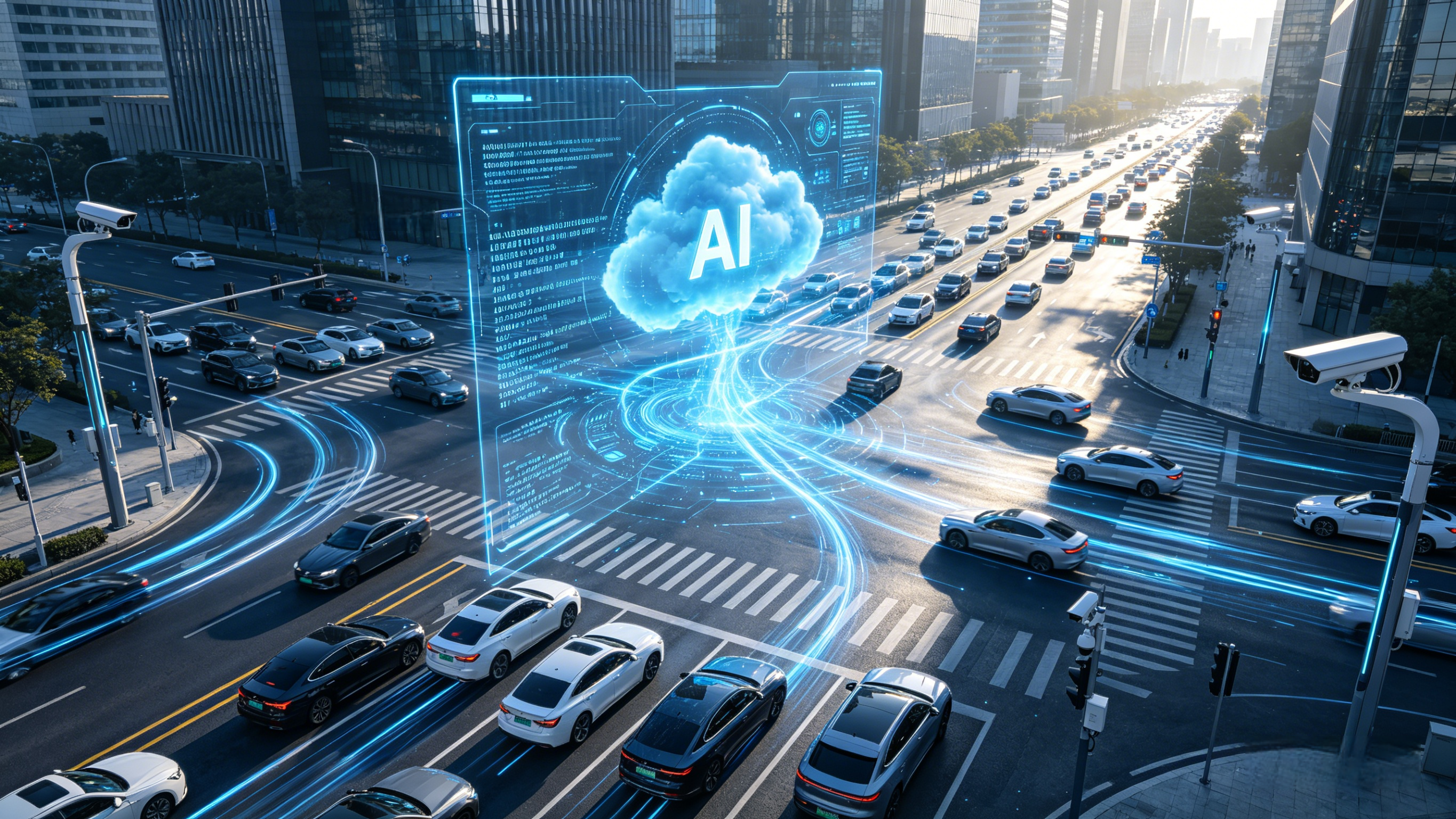
Urban traffic congestion is a global problem that traditional fixed-time traffic signals cannot solve. With the development of smart city technologies, AI-based traffic signal optimization has become one of the most effective ways to improve road efficiency.
Our intelligent traffic system uses radar-video fusion detectors to collect real-time traffic data, including vehicle flow, speed, queue length, and waiting time. All data is processed through MEC edge computing, allowing the signal controller to adjust timing within seconds.
The system supports automatic green wave coordination, adaptive timing, and regional traffic synergy. Unlike traditional signal controllers, it does not rely on manual settings. Instead, it automatically optimizes according to actual road conditions.
With AI traffic signal optimization, cities can reduce vehicle delay by 20%–40%, shorten queue length, and lower traffic pollution. It is the most cost-effective upgrade for modern urban traffic management.